AGI as a Meme: Whoever Names the Thing Decides When It Is Reached
AGI is not a threshold anyone measures. It is a word the labs are teaching the public, so they can decide for themselves when it has been crossed.
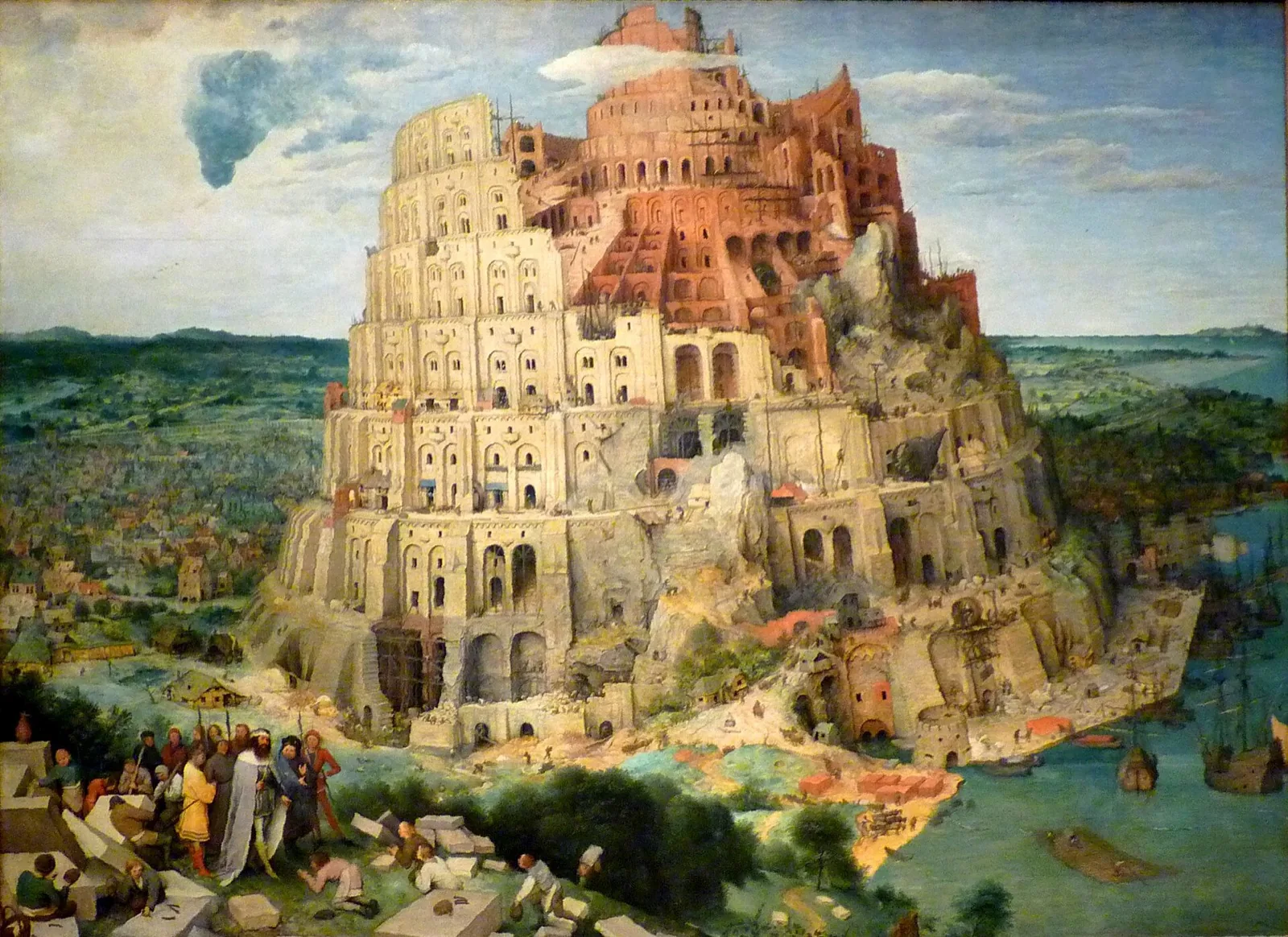
Kunsthistorisches Museum, Vienna
Something struck me watching the announcements this month. One term now runs through the discourse of every major lab, and it has become their stated objective: artificial general intelligence. At OpenAI this was already the case. At Google it is recent, and it has been settling in over the last few conferences.
That position is partly marketing. It also carries a strategic advantage, and this is the part worth looking at. There exists no outside authority to arbitrate. No institute holds the standard metre of general intelligence, no body will certify the crossing. So the term will mean what the people who use it most decide it means. As they saturate the public with the vocabulary, they earn the right to say, at a moment of their choosing, that the products and technologies they have deployed amount to a new level of capability, and that this level is the one we agreed to call general intelligence.
I want to be careful here, because this is not an accusation. Naming a thing in order to mark a before and an after is an old and perfectly conscious gesture in this field. In the 1950s, when John McCarthy introduced the term artificial intelligence, he introduced it precisely to designate a rupture, a difference from cybernetics, a way of saying that what was being built was of another kind. The word did work that the results alone would not have done. What is happening today is the same gesture, at a scale where the stakes are no longer academic.
What these models are actually learning
Underneath the vocabulary there is a real object, and it deserves a better description than the one the word AGI gives it.
Richard Dawkins introduced the notion of the meme in The Selfish Gene, in 1976, alongside the gene. Where the gene is the unit of biological transmission, the meme is the unit of cultural transmission: everything a brain holds that passes from one generation to the next without passing through DNA. The consequence is easy to miss because it is so ordinary. A child who grows into an adult does not develop from nothing. He develops from his genetic inheritance and his environment, certainly, but above all from the whole body of memes a society has already established, which lets him start from a common ground rather than from zero. Every piece of research ever conducted extrapolates from that ground.
This is what these large architectures are doing. They are learning our memes. They are producing a compressed, interactive version of the information collected across generations and generations.
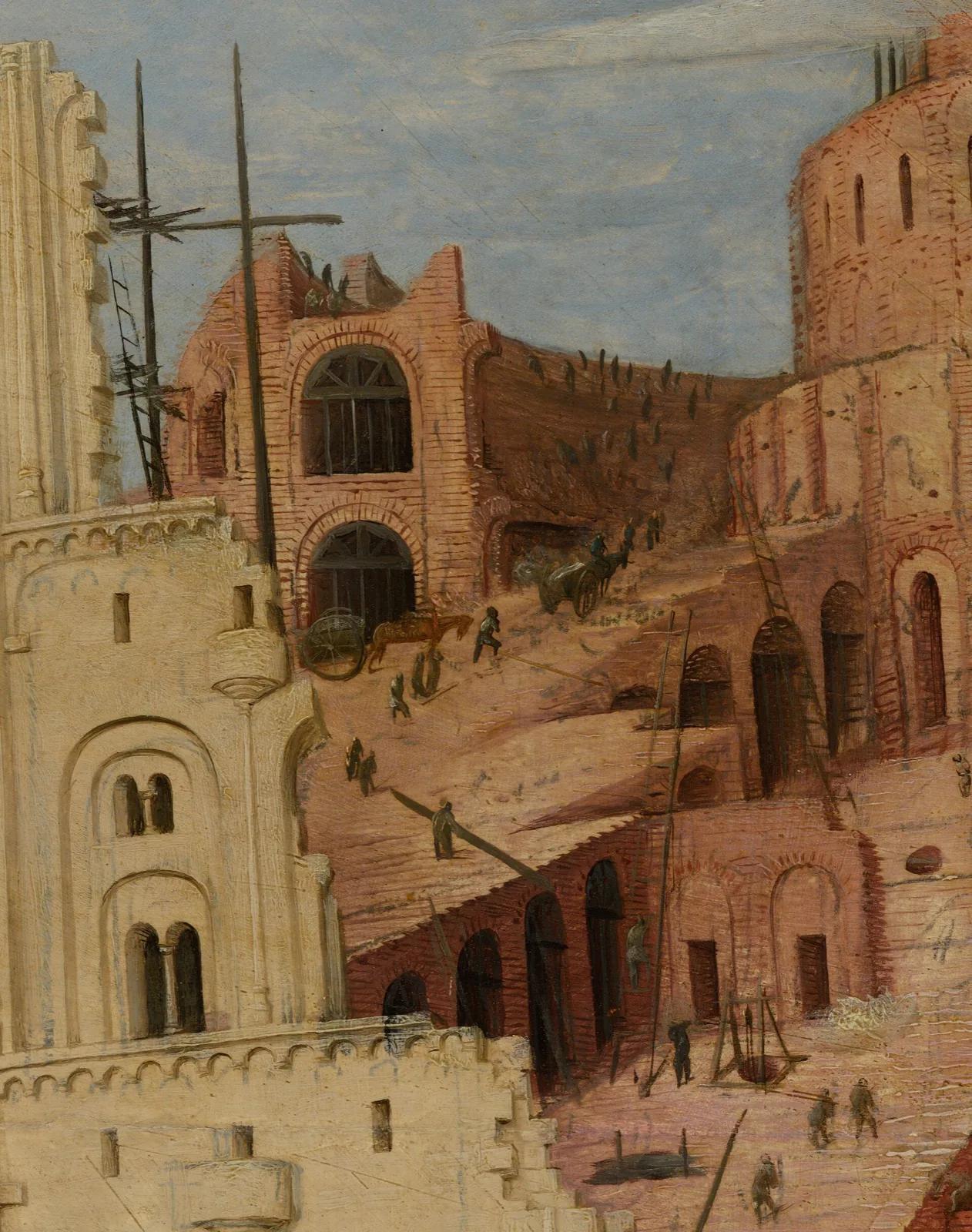
Kunsthistorisches Museum, Vienna
That body of information takes the form of a graph. Each node is a piece of knowledge acquired over generations, the edges are the interactions between those pieces, and each node can carry several modalities. The modalities are not decoration, and this is why the labs are pushing so hard on them. Consider a child again: as he grows he takes on an accent, slightly particular intonations, ways of placing a word. These are extremely subtle pieces of information, produced by a society, and they capture things the text does not say. A system that only reads text misses part of the meme.
Let me be clear about what I am not claiming. Capturing this graph and restoring it well is not, in itself, a reproduction of human intelligence. I am making a narrower point: doing it efficiently would be something for which there is a before and an after in a society.
A threshold of restitution, not of cognition
Which tells us what the threshold will actually be. Capturing is not enough. What these actors will call AGI is the moment the compressed knowledge is given back efficiently enough to change how we live and work. That is a social and economic event, not a cognitive one. The word will be attached to an effect, not to an internal property. Which is consistent with everything above: an effect is something you can demonstrate on a stage.
Take an organisation. As a company grows, it must spend a growing share of its energy fighting its own disorder. Meetings, synchronisation, layers of management: an enormous amount of effort goes into keeping everyone pointed in the same direction, and that effort produces nothing on its own. A system that can hold the context of every exchange and return the right information at the right moment acts as structural glue. It does not make the company more intelligent, it stops the company from spending itself on staying coherent.
And the distinction that survives inside all of this is worth stating on its own. Creating or recycling, in the sense of interpolating within an existing context: the machine will do that. Creating genuinely new value, at this stage, remains human, and the human will be free to put all of his energy there.
The threshold that does not exist
Now the part where I part ways with the term entirely.
The word AGI, in its current definition, is a complete anthropomorphism. It takes human intelligence as the dominant factor and measures everything against it. But intelligence is multidimensional. For any given objective, for any given capability, there are many ways of getting there, across very different spectra of intelligence. Calling the particular case we happen to know from the inside “general” is a category error.
There is a stronger version of this. Human intelligence is unique in that it emerges from our DNA, from the whole of evolution, from our environment, from the entire set of our senses. A machine learns from a simulated environment, or from the graph I described above, and that graph is always an abstraction of the real. The two can never be perfectly aligned. Not for want of engineering, but because they do not come from the same place. Perfect reproduction is not a hard objective, it is a badly posed one.
But suppose we set that aside. Suppose we grant the hypothesis and imagine a machine that comes close enough to human capability.
Then there is no moment at which it would simply have reached human intelligence without surpassing it. If we reproduce the whole set of human capabilities, we will necessarily be more intelligent than a human, because a machine does not tire. It can think indefinitely. It can be given senses and access to information no human will ever have. A machine that reproduces human reasoning is, by definition, a superintelligence.
Which means the sequence everyone works with, general intelligence first and superintelligence afterwards, describes two successive stages of the same point. The official vocabulary of the field holds an incoherence at its centre. And that, I suspect, is exactly what makes it useful: a threshold nobody can define is a threshold nobody can hold you to.
Amplified collective intelligence
If the threshold that matters is a threshold of restitution, then the honest name for what we are building is not artificial general intelligence. It is amplified collective intelligence. Not a new intelligence standing beside ours, but ours, made more available to itself.
I prefer that name for a reason that goes past accuracy. It puts the achievement back where it belongs, in the accumulated work of generations, and it removes the mysticism. It also makes the real risk visible, which the other term hides.
Because an amplified collective intelligence compresses everyone’s memes into a single artefact. And if that artefact answers in one voice, then what we called amplification is a flattening. The graph holds the disagreements, the local variants, the paths that were not taken. A compression that returns the average of all of it gives us back a version of ourselves that no one ever was.
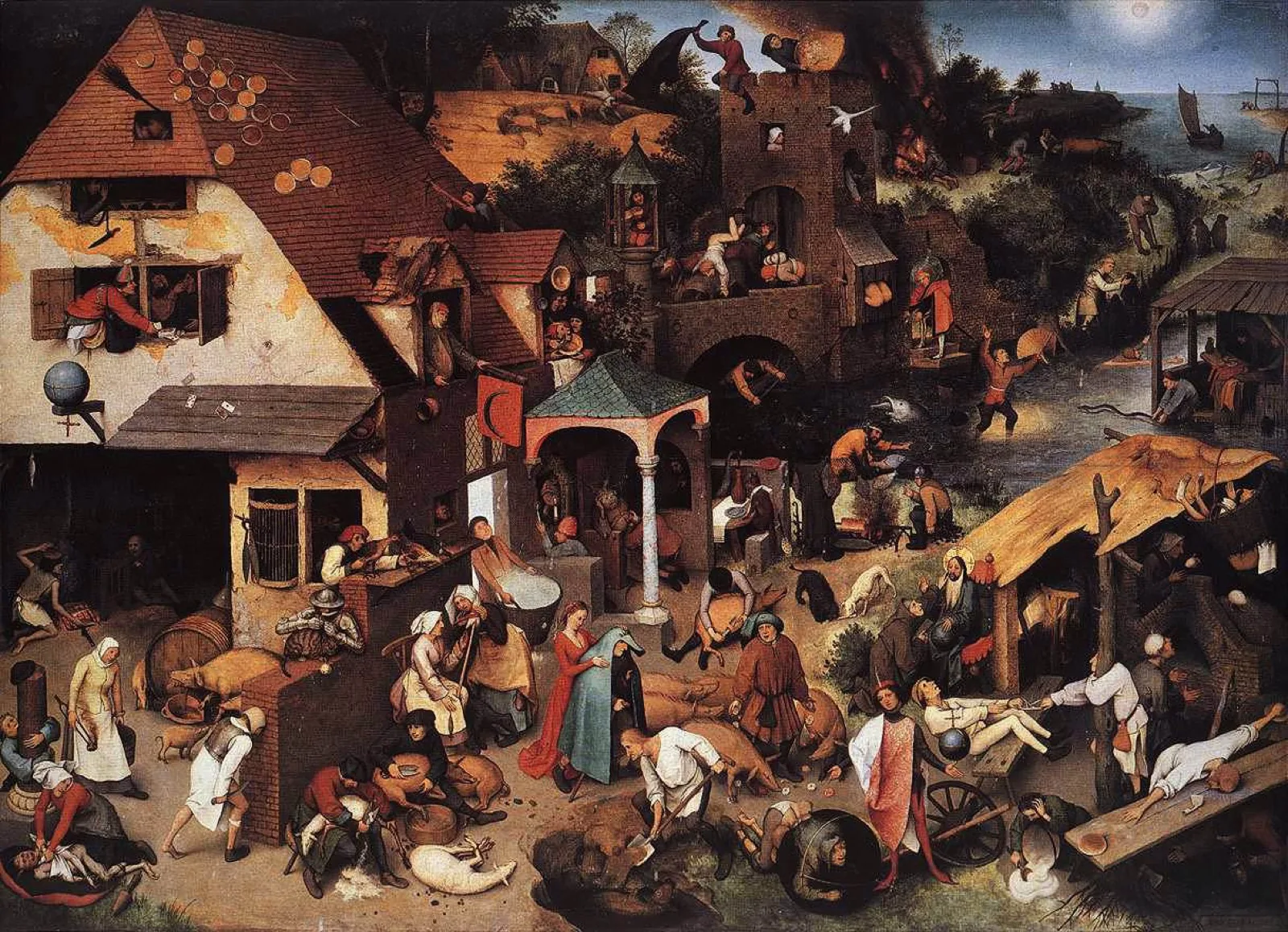
Gemäldegalerie, Berlin
I do not know how to avoid that, and I am not sure the people building it are asking the question. But it seems to me a better question than when we will have crossed a threshold that, as far as I can tell, does not exist.